
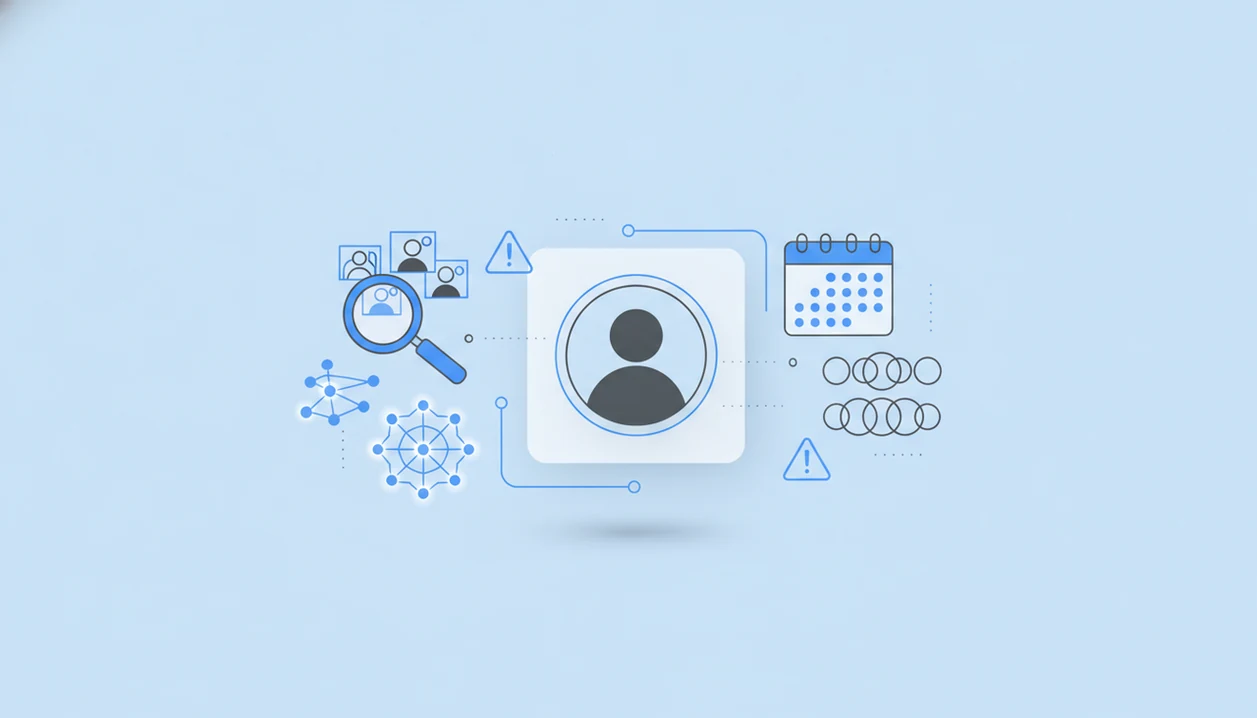
Definition: A fake profile checker is a tool or search method that examines public online account details, including photos, usernames, post history, and web footprint—to flag signals of a fake, impersonating, or suspicious profile.
What a Fake Profile Checker Actually Does
A fake profile checker scans publicly visible information for warning signs, not courtroom-level proof of identity. It looks at profile photos, usernames, bios, post timing, follower patterns, and public web matches.
Definition box: A fake profile checker is a signal-detection method for spotting suspicious account details across public online sources. It is different from identity verification, which usually requires official documents, account ownership checks, or platform-controlled data.
That distinction matters because social life now runs through profiles. Pew Research found that 73% of U.S. adults had used at least one social media site in 2024, according to its social media use report source. People use these checks before a dating meetup, a small business deal, or a conversation with a child about a new online friend.
The useful result is a short list of clues. Not a verdict.
5 Facts Everyone Should Know About Fake Profile Checkers
Fake profile checkers are useful when they are treated as clue-gathering tools. The safest workflow is to cross-check before you conclude.
- Reverse image search is usually the first check. It can reveal reused, stolen, stock, or scam-cluster photos when the same image has been indexed elsewhere.
- Username searches can connect public accounts. A matching handle on two sites is an identity clue, not proof that the same person controls both accounts.
- AI tools can organize messy public clues. They still miss edited images, private accounts, new profiles, and pages blocked from indexing.
- Fraud often begins with a deceptive identity. The FTC reported more than $10 billion in fraud losses in 2023, and impersonation scams remained a major consumer category, according to its 2023 Consumer Sentinel Network Data Book source.
- Ethical checking stays public. We keep a notebook line labeled “public sources only” when reviewing suspicious accounts, because locked posts and private data are not fair game.
For everyday users, reverse image search plus username search is often more useful than one paid report because it checks the two easiest-to-fake profile elements first.
How a Fake Profile Checker Works Behind the Scenes
A fake profile checker works by comparing public account details against indexed web data and visible platform signals. It does not enter private accounts or see a platform’s internal fraud systems.
Reverse Image Matching Process
Reverse image search uses visual matching, image hashes, and indexed copies of web images. In plain terms, the tool looks for photos that resemble the uploaded image, even if the file name changed. A grainy screenshot saved from chat may still match a stock-photo smile on another site, but cropping, filters, and AI-generated faces can break the match.
Username and Name Cross-Referencing
Username enumeration checks whether the same handle appears on public site structures, search results, or accessible APIs. Name plus location cross-referencing can add context from public profiles, business pages, alumni listings, or public records.
AI pattern detection may review bio text, follower ratios, posting frequency, and sudden engagement spikes. Good AI deep search guides for finding people online by name, username, photo, and public digital footprint with clear ethics and limitations deliver organized public clues, not private access or guaranteed identity matches.
How to Use a Fake Profile Checker Step by Step
Use a fake profile checker by collecting public clues, checking each clue separately, and judging the combined pattern. Do not let one match decide the whole question.
- Save the public profile photo. Screenshot only what is visible, and redact phone numbers or street addresses before storing anything.
- Run a reverse image search. Check whether the image appears on stock sites, old dating profiles, scam reports, or unrelated names.
- Search the username across platforms. Keep the original profile URL open in a browser tab before a username changes.
- Review activity history. Look at post age, follower ratio, bio detail, comments, tagged photos, and sudden changes in tone.
- Cross-reference public details. Tools like DeepSearch AI can help compare names, usernames, photos, and public footprint clues alongside a broader find people online workflow.
- Evaluate the combined signals. No single check is conclusive, especially when the account is new or uses original photos.
The pocket check is real. If you feel rushed to send money, leave the app and slow down.
Common Myths About Fake Profile Checker Results
A fake profile checker cannot prove that someone is a fraud. It can only surface mismatches, reused media, thin history, and patterns that deserve caution.
One myth is that a matching photo search always means the profile is fake. Real people reuse headshots across LinkedIn, dating apps, speaker pages, and old school profiles. We have also seen the same garden fence across public profiles help confirm continuity, but that still remains a clue.
Another myth is that AI search results equal verified evidence. They rely on incomplete public indexing, so a gray “No results found” page can mean no public match or simply a bad query.
Polished profiles can still be risky. Scam accounts buy followers, copy lifestyle captions, and use clean branding. False negatives also happen when a profile uses AI-generated faces, original photos, or a brand-new account with little public history.
Fake Profile Checker Tools Compared: Apps, Sites, and AI Search
Different fake profile checker tools answer different questions. The right choice depends on whether you need photo matching, username discovery, platform-specific signals, or organized public profile context.
| Tool type | Examples | What it checks | Main limit |
|---|---|---|---|
| Reverse image search | Google Images, TinEye | Reused or indexed photos | Misses private, edited, and AI-generated images |
| Username search | Handle lookup tools, social search | Same handle across public sites | Shared usernames create false positives |
| People-finder sites | pipl.com, spokeo.com, truepeoplesearch.com | Public records and profile clues | Coverage and freshness vary |
| AI deep search | Apps such as DeepSearch AI, Social Catfish | Photo, name, username, and footprint patterns | Still limited to accessible public data |
| Platform checkers | Instagram or TikTok follower tools | Engagement and follower patterns | Often narrow and platform-specific |
Reverse Image Search vs Username Search
Reverse image search is better for stolen-photo checks. Username search is better when a handle has a long public trail.
AI Deep Search for Profile Verification
AI search can reduce tab overload by putting public clues in one place. Pew Research reported that 88% of U.S. teens use YouTube and 63% use TikTok, so platform coverage matters when checking youth-facing profiles source.
Ethical Rules for Using a Fake Profile Checker
Ethical fake profile checking means using only publicly available information and explaining the limitation first. Do not try to access locked accounts, guess passwords, bypass privacy settings, or pressure someone else to share private screenshots.
Checking a public footprint is not the same as doxxing. Sharing someone’s home address, family names, workplace details, or phone number without consent can cause real harm. We delete notes that drift into family member names because they are usually unnecessary for profile safety.
The FTC received about 1.1 million identity theft reports in 2023, according to the same Consumer Sentinel Network data source, so the need is real. Responsibility is just as real.
Do not use checker results as proof of guilt. If the account is threatening, extorting, impersonating, or requesting money, report it to the platform or law enforcement instead of confronting the person directly. A careful find people online process should reduce risk, not escalate it.
Limitations
Fake profile checkers are incomplete by design because they rely on public, accessible, and indexed information. They help you notice risk, but they cannot settle identity on their own.
- They cannot confirm real-world identity with certainty. Public data alone does not prove who controls an account.
- Reverse image search misses many images. AI-generated faces, edited photos, private images, and fresh uploads may not match anything.
- Username searches create false positives. Multiple people can use the same handle, nickname, or display name across different platforms.
- Public-web tools cannot see locked content. Private, deleted, restricted, or platform-internal data stays outside the search.
- Some products overpromise accuracy. Indexing gaps and stale records affect even paid people-search tools.
- New fake profiles can pass every automated check. Original photos and careful details leave fewer public traces.
- Coverage varies by platform. No single checker covers Instagram, TikTok, dating apps, marketplaces, and forums equally.
A timestamp beside a decade-old post can help, but it is still context. Not certainty.